
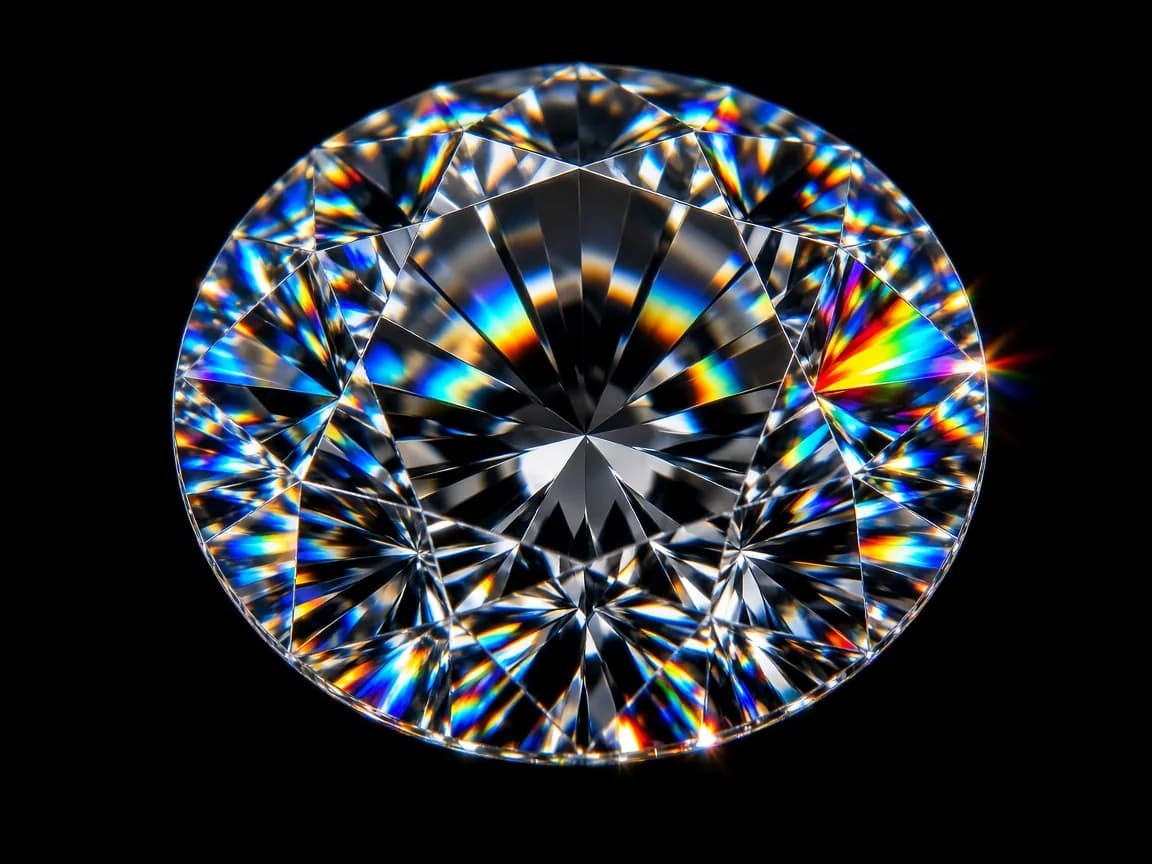
The House of InfiniRae
Why moissanite
outshines diamond.
Born from a meteorite, perfected in the lab, and cut for maximum fire. Here is the honest case for the world’s most brilliant gemstone.
Our Story
Fine jewelry, without the fine print.
Before I founded InfiniRae, I worked for a jeweler. There, I saw firsthand how customers were steered into paying prices far beyond the value of what they bought. I had always wanted to wear fine jewelry myself, but it was never within reach.
Then I watched my daughter, Rae, fall in love with jewelry too. As a single father here in Nashville, I wanted her, and everyone who has ever admired something beautiful from a distance, to know that feeling luxurious should never depend on an inflated price tag.
So I built a brand around two materials I believe in: lab-created moissanite, with more fire than a diamond, and 316L stainless steel, made to be worn every day. The name says it all: infinity, for a love without limits, and Rae, the reason it exists.
Luxury was never meant to be out of reach. It was meant to be worn.
Christopher, Founder
The Truth About Mined Diamonds
The real cost
of a mined diamond.
For generations, the diamond has been sold as the ultimate symbol of luxury. Yet true luxury should feel as good as it looks, and the story behind a mined diamond is often anything but beautiful.
01
A heavy toll on the earth
Diamond mining relies on heavy machinery, explosives and large volumes of water. A 2024 peer-reviewed study cites estimates of more than two and a half tonnes of mineral waste for every carat mined, along with the emissions of the work itself. Researchers have linked diamond mining to deforestation, silted and polluted rivers, and land left behind without restoration.1–3
02
A human cost too high
Diamonds have financed brutal civil wars, including in Angola and Sierra Leone, conflicts marked by violence against civilians that devastated families and entire communities. The Kimberley Process, created to stop this trade, defines conflict diamonds narrowly as stones that fund rebel movements, leaving abuses tied to other actors outside its scope, and its controls cover only rough stones. Once a diamond is cut and polished, its origin can be difficult to trace.4–6
03
A price built on perception
Retail markups on diamond jewelry have long been reported at 100 to 200 percent, which is why reselling a diamond so often disappoints: buyers typically pay wholesale prices or less, and owners recover only a fraction of what they paid. Much of the diamond’s aura of rarity was shaped by tightly managed supply and a decades-long advertising campaign.7
Scarred landscapes. Communities torn apart. A price that rarely holds its value.
So ask yourself: what about that says luxury?
At InfiniRae, we believe luxury deserves a better definition. Every moissanite we set is created in a laboratory, not pulled from a mine, so no conflict zone stands behind your stone. It returns more than twice the fire of a diamond (dispersion 0.104 vs. 0.044), and we set it in polished 316L stainless steel. Brilliance with nothing to hide.
- Sun, Jiang & Wang, “The environmental impacts and sustainable pathways of the global diamond industry,” Humanities and Social Sciences Communications (Nature), 2024
- Galli et al., “Socio-environmental impacts of diamond mining areas in the Democratic Republic of Congo,” Science of the Total Environment, 2022
- “Impact of mining on the environment and water resources in northeastern Angola,” Biodiversity & Ecology, 2018
- United Nations, “Conflict diamonds” and General Assembly resolution 55/56
- Global Witness, “The Kimberley Process”
- Are Conflict Diamonds Forever?, ANU Press, ch. 2
- Edward Jay Epstein, “Have You Ever Tried to Sell a Diamond?” The Atlantic, 1982
Moissanite vs. Diamond
The numbers speak for themselves
2.65–2.69
More brilliance
Brilliance comes from how strongly a stone bends light. Moissanite’s refractive index is higher than diamond’s 2.42, so it returns more white sparkle.
0.104
More than twice the fire
Dispersion splits light into rainbow colours. Moissanite’s is more than double diamond’s 0.044, creating its signature flashes of colour.
9.25
Built for every day
On the Mohs scale, moissanite is second only to diamond (10) — harder than sapphire and ruby (9), and made to be worn, not stored.
0
Mines required
Every moissanite we set is created in a laboratory, so there are no mining or conflict concerns attached to your stone.
| Property | Moissanite | Diamond |
|---|---|---|
| Brilliance (refractive index) | 2.65 – 2.69 | 2.42 |
| Fire (dispersion) | 0.104 — more than twice a diamond’s | 0.044 |
| Hardness (Mohs scale) | 9.25 — second only to diamond | 10 |
| Origin | Lab-created; no mining required | Usually mined (lab-grown also exists) |
| Everyday durability | Excellent; resists scratching & chipping | Excellent |
| Price for a comparable look | A fraction of the cost | Significantly higher |
And the price? A moissanite of the same size typically costs a small fraction of a comparable diamond — leaving room for the piece you actually want.
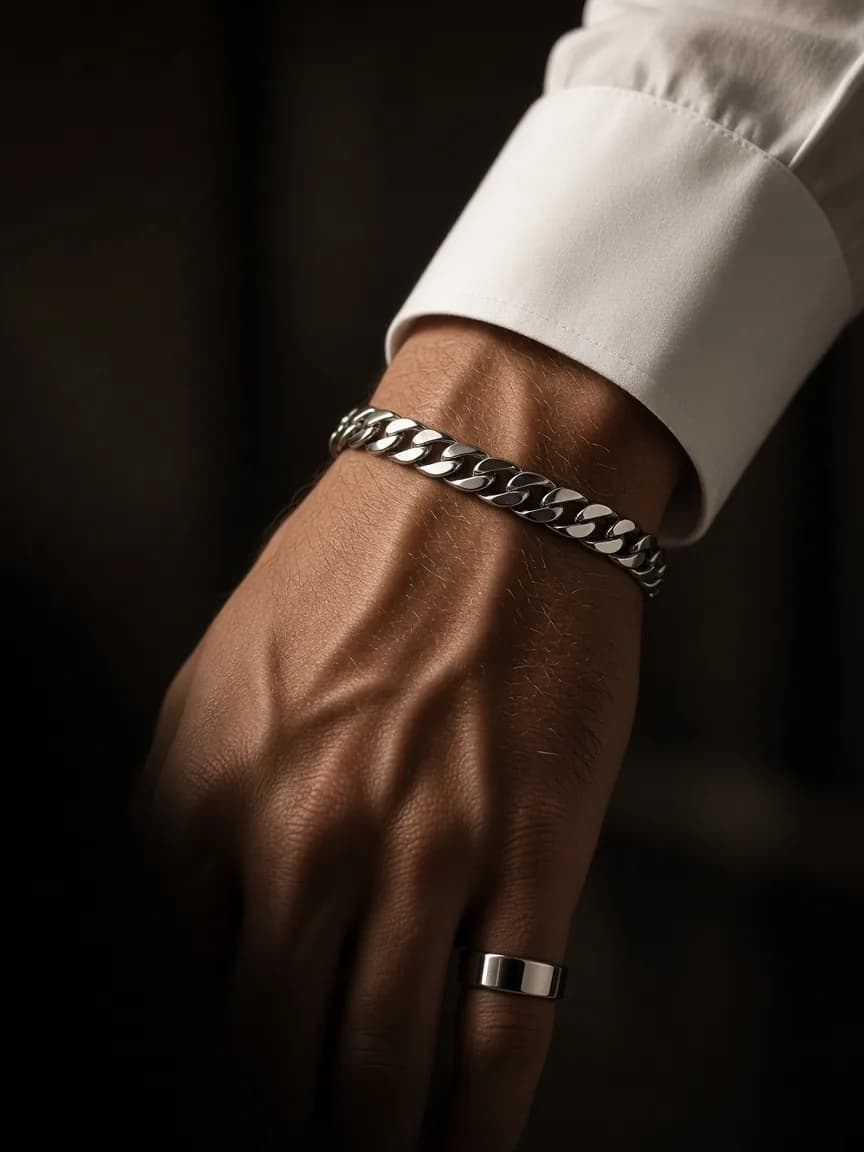
Our Metal
Why 316L stainless steel
316L is a low-carbon, molybdenum-bearing stainless steel used in medical instruments and marine hardware because it resists corrosion so well. For jewelry, that means:
- Hypoallergenic for most people, including many with sensitive skin
- Resists tarnish, rust and discolouration — no turning green
- Harder and more scratch-resistant than sterling silver
- Keeps its polish without plating that wears through
- Exceptional value compared with precious metals
Care Guide
Keeping the sparkle
- Clean gently. Warm water, a drop of mild dish soap and a soft toothbrush. Rinse and pat dry.
- Store separately. Moissanite can scratch softer pieces — keep each piece in its own pouch.
- Skip harsh chemicals. Remove before using bleach or strong cleaning products.
Questions, answered
Is moissanite a “fake diamond”?
No. Moissanite is a gemstone in its own right — crystalline silicon carbide — with its own distinct optical properties. It is not glass or cubic zirconia, and we always sell it honestly as moissanite.
Can people tell the difference?
To the naked eye, most people cannot. A trained eye may notice moissanite’s extra rainbow fire, especially in bright light, and gemological testing can distinguish the two.
Will moissanite get cloudy or lose its sparkle?
No. Moissanite’s brilliance is a property of the stone itself and won’t fade. Like any gem, everyday lotions and oils can temporarily dull the surface — a quick clean restores it.
Is moissanite durable enough for an engagement ring?
Yes. At 9.25 on the Mohs hardness scale, moissanite is second only to diamond and well suited to everyday wear.
Will stainless steel turn my skin green?
No. 316L stainless steel does not tarnish or react the way copper-based alloys can, and it is hypoallergenic for most people.